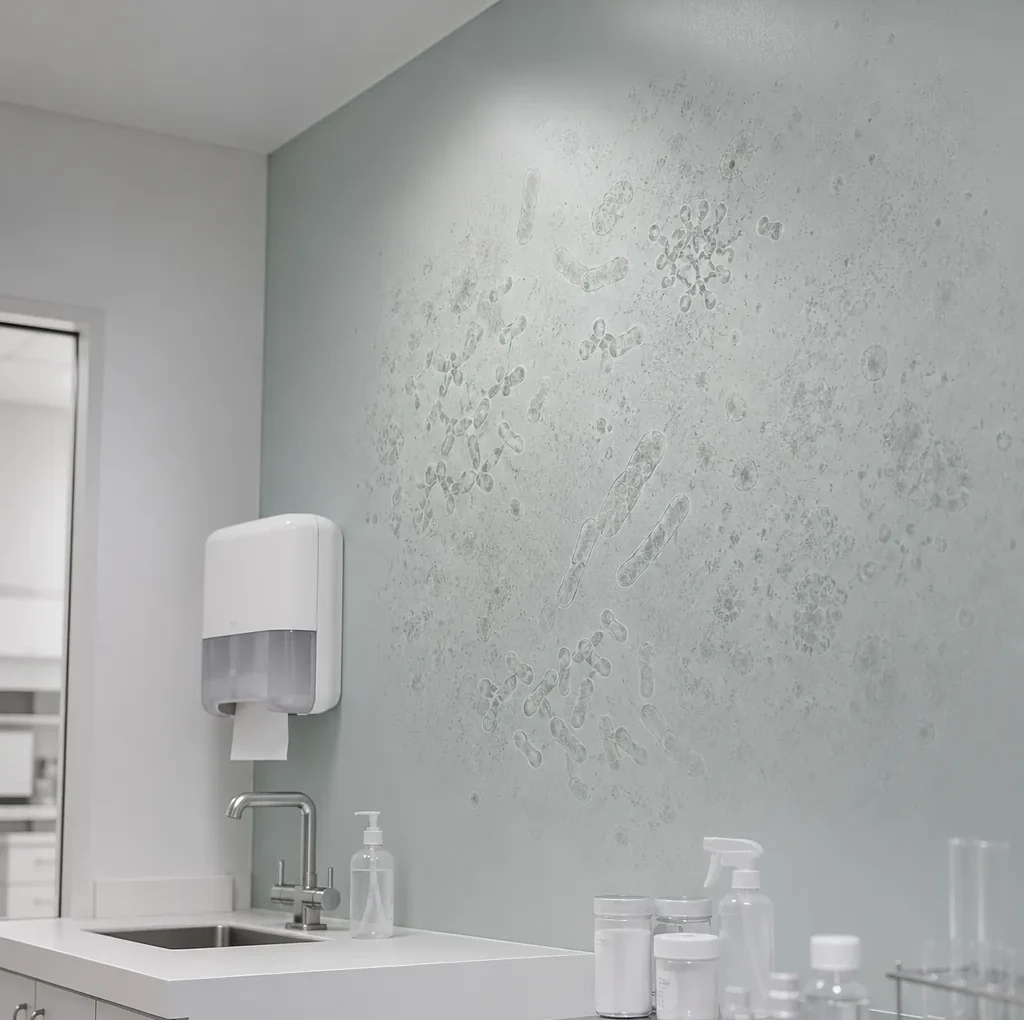

Bacteria-resistant dry paint film:
reduce risk & increase hygiene
The Blue Line is the coating line focused on coatings where the dry film offers extra protection against bacterial attack.
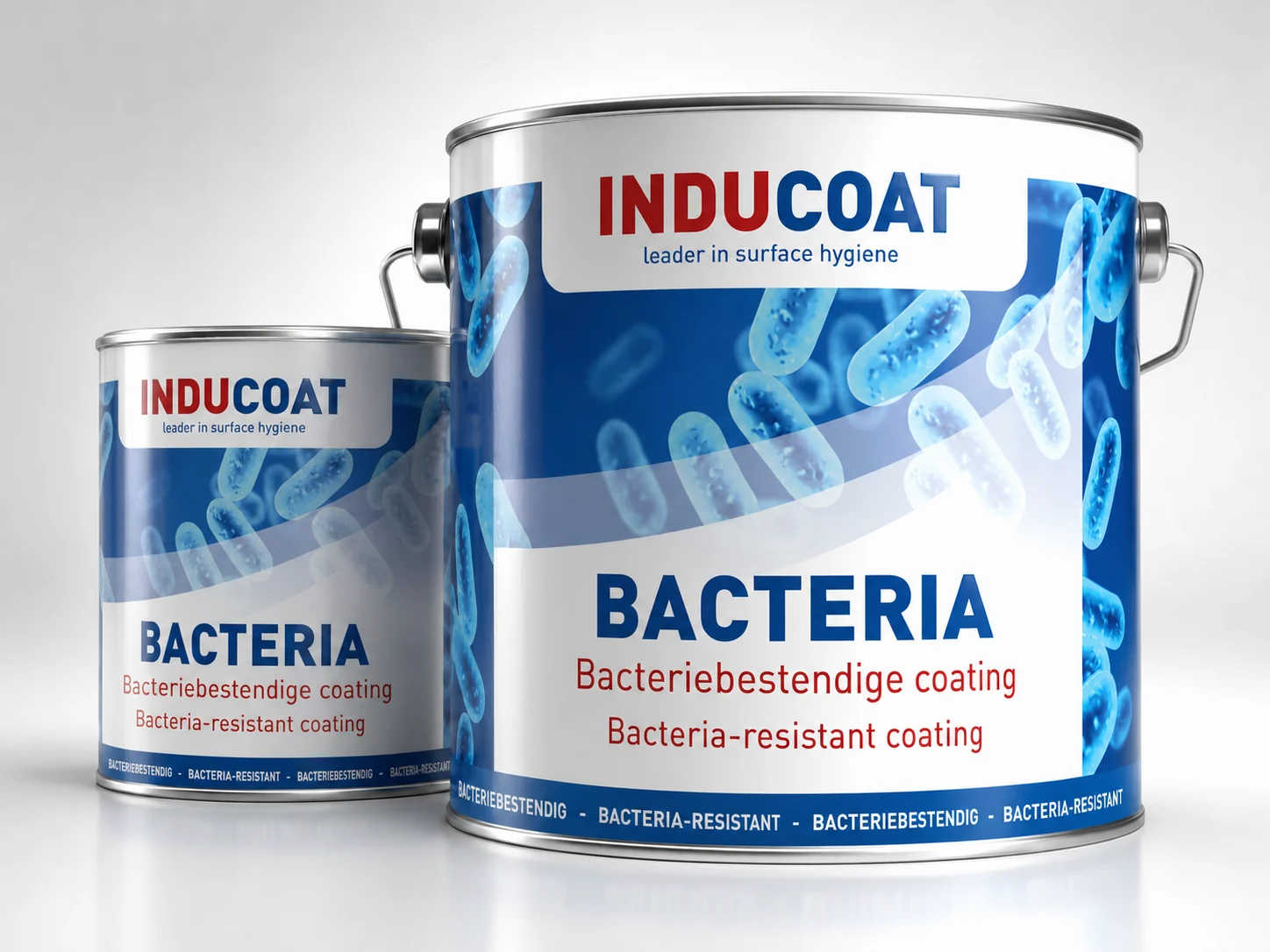
Additional reassurance against bacteria
In hygiene-critical environments, a bacteria-resistant dry paint film offers additional reassurance. Protection between cleaning intervals gives facilities managers and maintenance teams greater confidence in the material choice, while the cleaning and disinfection protocol remains the priority.
Protection between cleaning intervals. Even in clean environments, growth reappears on surfaces between two cleaning cycles. The coating in the bacteria-resistant system keeps the dry paint film protected against bacterial degradation during those periods. The coating therefore does not replace the cleaning regime, but complements it.
Water-based and a free choice of colours. Easy to apply and available in all RAL colours.
Supporting evidence. Test results, standards information and practical case studies are available on request, from Nestlé to Abbott. Always consult the product data sheet and safety data sheet before use.
The bacteria-resistant system is mainly applied in food industry and in healthcare, where standards such as BRCGS and GMP apply. If the issue is mould rather than bacteria, then view the mould-resistant system.
#1: Dry paint film protected between cleaning cycles
Even with top hygiene, micro-damage, condensation, splashes or residue can occur where bacteria can attach themselves.
The dry paint film remains protected against bacterial attack during those periods, precisely in the hours or days when no cleaning takes place.
#2: Not every surface is cleaned with the same level of thoroughness
Even with careful protocols, walls and ceilings are often cleaned less intensively than equipment and contact points.
It is precisely on such hard-to-reach surfaces that moisture, dirt, and minor damage can increase the load.
#3: Additional support during audits in the food industry
The coating protects the dry paint film from bacterial attack and complements the cleaning protocol; it does not replace cleaning, disinfection, or audit requirements.
Product information, test results, and confirmed case studies can substantiate material selection during audits.
Where the bacteria-resistant system makes the difference
In a production room or a healthcare facility, the focus is almost always on the equipment and touchpoints. That's where intensive cleaning and measurements take place. Walls and ceilings are often cleaned less intensively, are more difficult to access, and can be subjected to additional stress due to moisture, dirt, and minor damage.
There, the bacteria-resistant system is an additional material choice. The coating does not alter the cleaning protocol and does not replace it. It is intended solely to protect the dry paint film against bacterial degradation between cleaning cycles.
When do you opt for this?
The bacteria-resistant system is primarily used where hygiene must be demonstrable: in the food industry, where audits are conducted according to BRCGS, IFS or GMP, and in hospitals and care homes. Examples include production areas, cold stores, dispatch areas, kitchens, sanitary facilities and treatment rooms.
During audits, that choice helps to demonstrate that material usage, cleaning, and hygiene risk management have been considered together. Therefore, with the system, we also provide the supporting documentation: test results, product and safety data sheets, and case studies from companies you know.
Unsure whether this is the right system? First view the Inducoat solutions, or request a free, no-obligation on-site audit.
Request contact