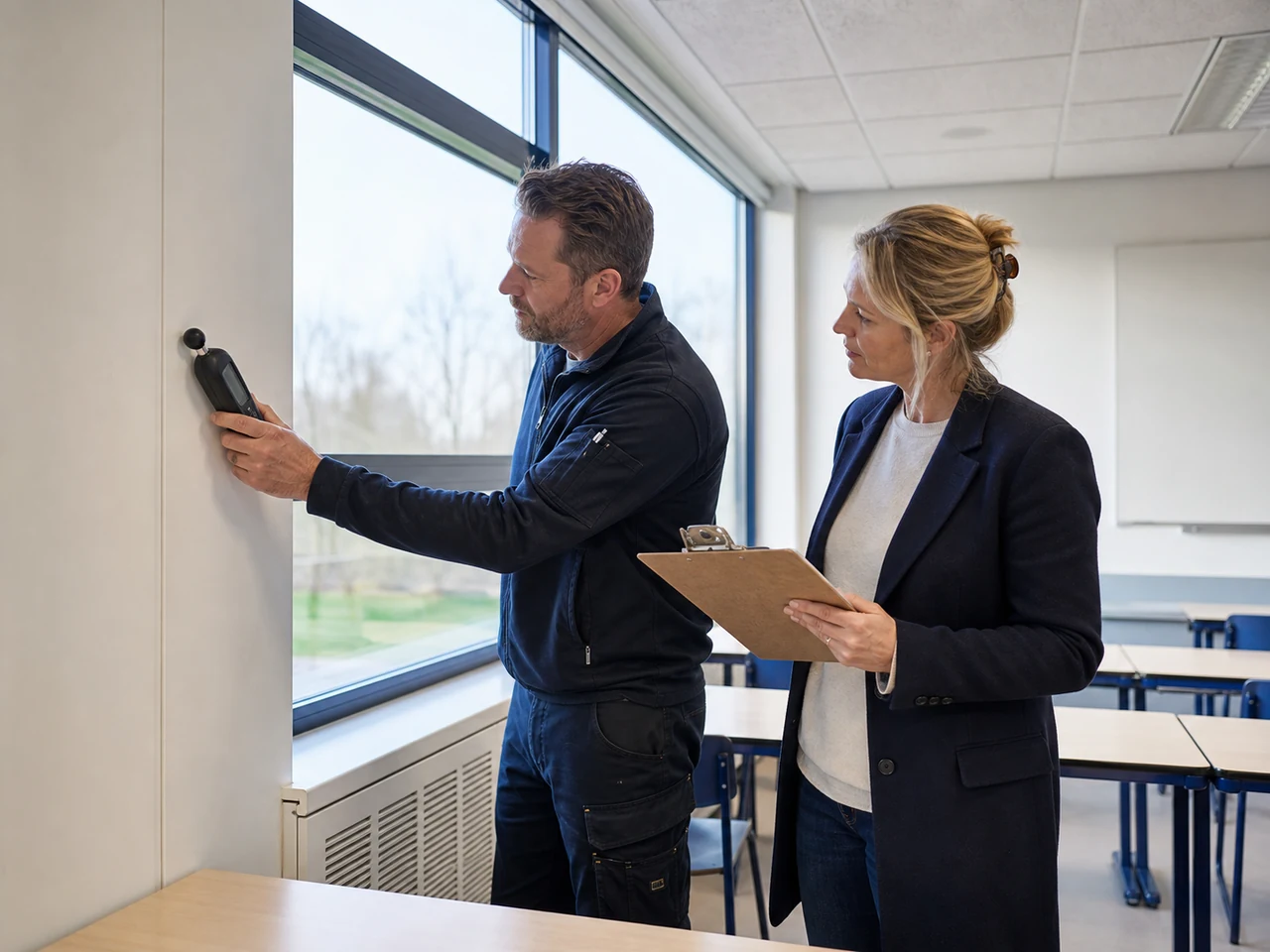
Despite improved ventilation systems, the quality of the indoor environment in classrooms remains a concern. Measurements can reveal mould spores, even when structural measures have been taken. What you can't see, can still be there.
This is why schools sometimes opt for mould-resistant coating for schools during planned maintenance. The dry coating film has been tested for mould resistance; ventilation, moisture control and structural measures remain paramount.
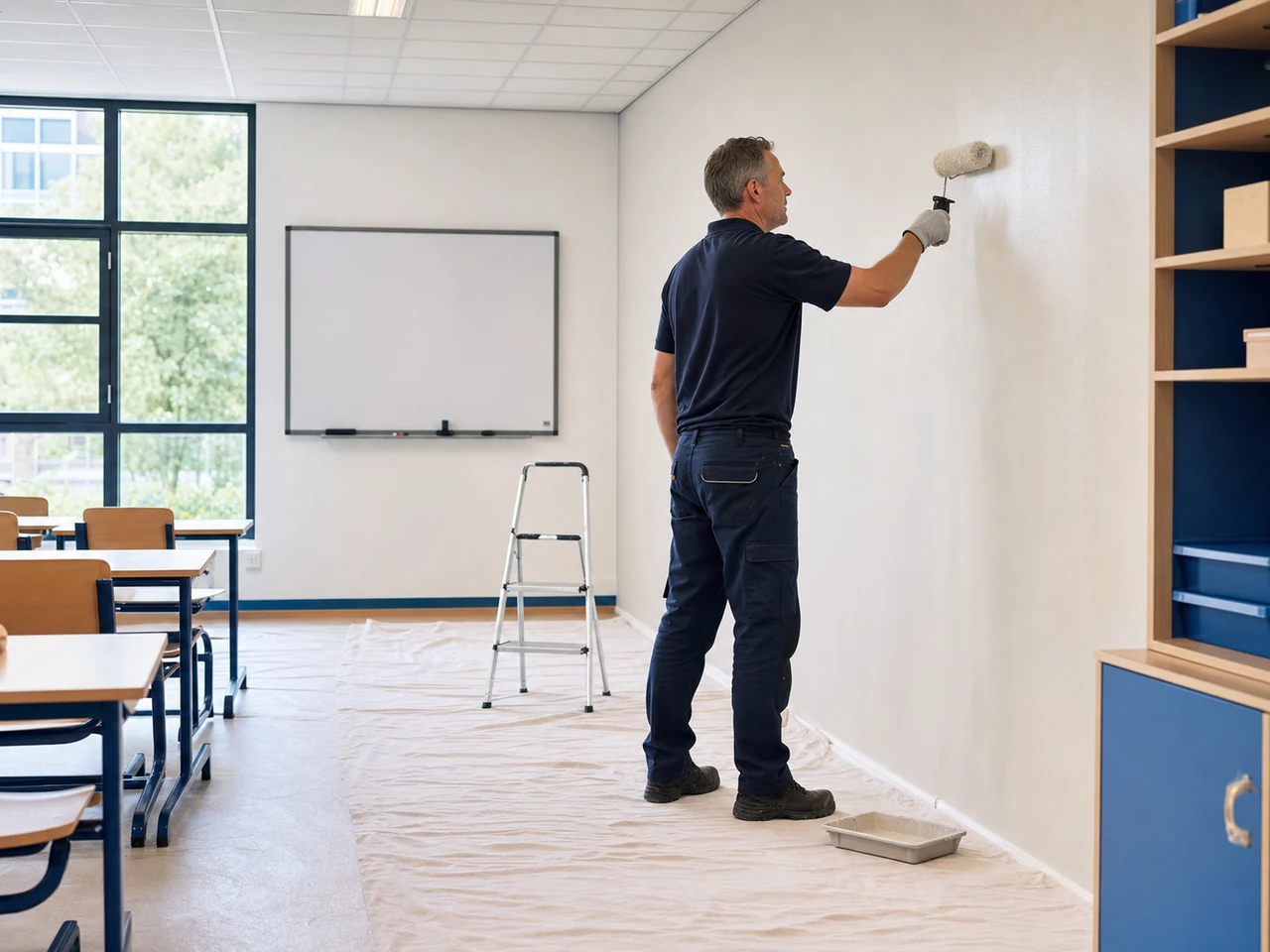
Is painting work planned? When the project situation allows, the system selection can be incorporated within the same maintenance budget and maintenance window, in any desired colour scheme. This makes use of the existing schedule without an additional work phase.
Complaints from teachers and pupils about the indoor environment in the classroom
Structural causes require a source-based approach
Insufficient knowledge of mould and finishing
The application of mould-resistant wall finishes for schools with Inducoat Fungi can be tailored to project-specific structural and hygienic preconditions. The finish therefore does not replace primary building-physics measures, but forms an additional protective layer that increases the robustness of the interior finish.
Right now: preparing for the summer closure
Will the painter be working in the classroom next summer? If the project situation allows, the dry paint film can be given a mould-resistant finish within the same budget and schedule, in any desired colour scheme. This allows the school to make use of the maintenance window without an additional work phase.
In a practical SchimmelZeker session, we discuss the substrate, application and management considerations with the school and painter.
Mould in school buildings requires more than just cleaning
Mould problems in schools are often related to dampness, condensation, ventilation and intensive use of space. Addressing the source remains the priority. However, cost, planning and renovation do not always make it possible to eliminate all causes immediately.
When structural measures and maintenance cannot take place simultaneously, a mould-resistant wall finish offers a practical interim solution. The coating protects the dry paint film, but does not replace ventilation or moisture control. This gives the school and manager time for a structural solution and helps to limit visible nuisance within the maintenance plan.
The school, facilities manager and maintenance partner thus work from a single plan for tackling the cause, finishing, cleaning and follow-up maintenance.
Partner of schools and educational institutions since 2007
A joint approach – The school, facilities manager and maintenance partner work from the same assessment and system selection, aimed at fewer recurring complaints and greater certainty in maintenance.
Long-lasting protection Thanks to Slow Release technology, the dry paint film remains mould-resistant for years, even in heavily used classrooms, corridors, and sanitary areas.
Tailored for use The substrate, ventilation, moisture exposure, cleaning and planned maintenance are assessed together.
In short: A mould-resistant coating for schools is a supplementary measure within a broader, systematic approach.
0
%
Estimate from 2012
Minimum proportion of Dutch school buildings with damp problems, based on inspections.
+
0
%
Higher odds of coughing
In the event of damp or mould problems at school (OR 1.32; statistical association).
+
0
%
Higher odds of wheezing
In the event of damp or mould problems at school (OR 1.68; statistical association).
Sources: Haverinen-Shaughnessy et al., Indoor Air (2012); Fisk et al., Indoor Air (2019). The 20% estimate relates to inspections carried out in 2012. The percentages for 32% and 68% represent higher odds (OR 1.32 and 1.68), not current prevalence figures. The health figures show a statistical association and do not constitute evidence of causality or of a health effect of Inducoat products.
Not an explicit Programme of Requirements criterion, but relevant nonetheless
Mould is not a standalone performance requirement in the Fresh Schools Programme of Requirements. The subject falls indirectly under building-physics and building-services preconditions, such as ventilation capacity, control of internal moisture production, prevention of condensation and thermally correct detailing.
That is why the approach starts with damp, ventilation and structural details. In practice, however, mould in school buildings remains a significant maintenance risk. Mould-resistant wall finishes for schools can then be assessed as an additional layer of the system, tailored to the substrate, the use of the space and cleaning requirements.
Mould in school buildings first requires checks for moisture, condensation, ventilation and thermal bridges. Tackling the cause therefore always remains the priority.
Tip 2. Make the most of the summer closure
Combine planned painting work with substrate repairs and mould-resistant wall finishing for schools. This limits additional work phases.
Tip 3. Take the use of the space into account
A classroom, gymnasium, and sanitary facility are subject to different stresses. Therefore, choose a suitable preparation, finish, and maintenance method for each space.
Tip 4. Record management arrangements
Record cleaning, checks and follow-up maintenance. This is how the school, facility manager and maintenance partner work from a single plan.
Previous
Next
Practical projects with mould-resistant wall finishes for schools
Mould resistance is an important aspect in the food industry, particularly in bakeries, because of food safety standards such as the British Retail Consortium