Skip to content
Mould-resistant coating for the food industry

Additional support during audits in the food industry

For coatings on walls, ceilings and floors without intended food contact, there is no general legally required HACCP, BRCGS, GMP or FDA certification. HACCP, BRCGS and GMP are frameworks that cover both hygiene and food safety within a food company. A suitable Inducoat system can support measures within these frameworks, but that does not mean the coating itself is certified.

FDA compliance is relevant only for a precisely defined application involving intended food contact. For surrounding surfaces, we therefore assess the factors that matter for each product system: the function of the dry coating film, cleanability, and resistance to the actual loads and cleaning agents used.

  • Continuous mould and bacteria resistance of the dry coating film, 24 hours a day and 365 days a year
  • To be assessed for each product system within HACCP, BRCGS, IFS and GMP frameworks; no certification or guarantee of audit approval
  • Tailored advice for walls, ceilings, floors, joints, and critical areas
  • A project-specific “Clean & Coat in 24 hours” approach when the substrate, drying times and local conditions permit
  • Planning within the available maintenance window can limit maintenance and production downtime and a well-maintained finish supports the company image

All the benefits of Inducoat

Cleanable finish for production environments

Alignment with local quality frameworks

Sustainable and cost-effective solutions

Why free Inducoat advice is valuable for food manufacturers

A free audit of Inducoat provides technical insight into the current substrate, problem areas and maintenance requirements. Therefore, the outcome helps substantiate a system choice within your own GMP, BRCGS or IFS framework; the audit is not a certification or guarantee of audit results.

If maintenance or painting is planned, coating and sealant choices can be directly incorporated into the schedule, without creating a separate process.

Our specialists then assess on site the walls, ceilings, floors, joints and critical areas. This creates a suitable system build-up. The advice is non-binding and free of charge.

Technical advice on mould-resistant coating in the food industry
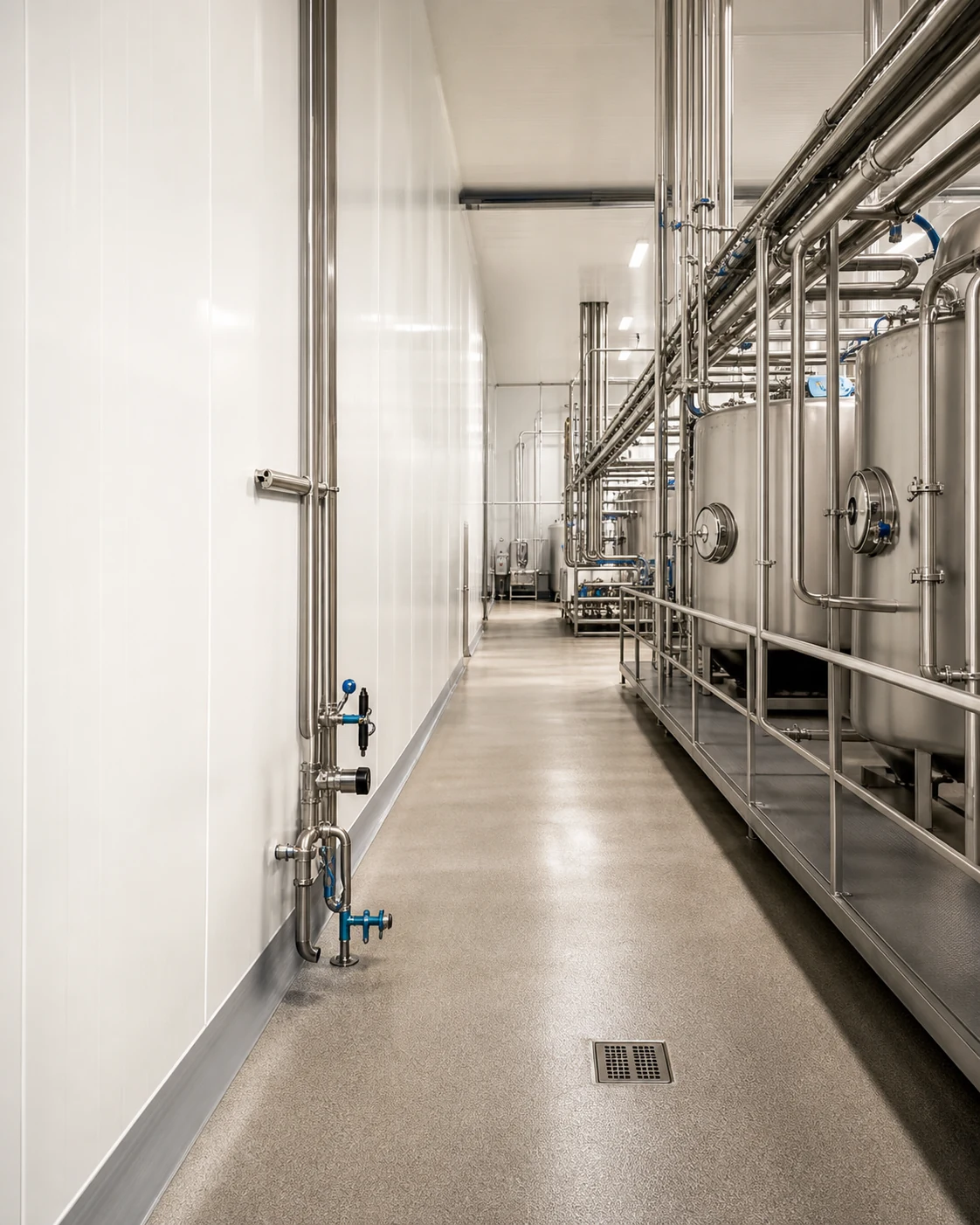
Inspection for a hygienic wall finish for food production in a production area

Dry-film protection: 24/7 – 365

A risk assessment highlights where the substrate, cleanability, and service load require extra attention. For steel structures, a separate anti-corrosion system at C5-M level can be chosen; for surfaces susceptible to mould or bacteria, it involves a mould-resistant or bacteria-resistant dry coating film. These performances must be assessed per product system and substrate.

For walls, ceilings, and floors whose dry coating film is susceptible to attack by mould or bacteria, a mould-resistant or bacteria-resistant system can be considered as supplementary material protection. This is in addition to, and not a replacement for, the hygiene and cleaning plan.

By aligning these choices with a planned maintenance window, audits, implementation and management can be coordinated more effectively. This creates a practical balance between hygiene, maintenance and costs, without equating product performance with food safety or audit approval.

Relevant quality frameworks:

BRCGS

SQF

FSSC

22000

ISO 22000

Evidence-based system choice

Hygienic wall finish for food and maintenance requirements

Inducoat focuses its advice on the practical aspects of food processing and packaging. Product specifications, substrate, cleaning regime and application are therefore aligned with the local quality and maintenance plan.

Within food factories there are structural problem areas where moisture, mould growth and bacterial attack require extra attention. That is why we assess the dry coating film per zone, in addition to source approach, cleaning and maintenance. Below are five areas where mould-resistant and bacteria-resistant systems with Inducoat Cleaner, Inducoat Fungi, Inducoat Bacteria and/or MSP 2.0 can be included in the consideration.

Technical advice on mould-resistant coating in the food industry
Tip 1. Start with a risk assessment
Map out the substrate, moisture load, cleaning and critical junctions. This ensures that a mould-resistant coating in the food industry is aligned with the local maintenance plan.
Tip 2. Ensure details are easy to clean
Wall-to-ceiling joints, skirting boards and conduits require extra attention. Therefore, choose a hygienic wall finish for food that matches the substrate and load.
Tip 3. Keep performance properties separate
C5-M concerns corrosion protection; mould resistance concerns the dry coating film. Therefore, record both performance properties separately in the system selection.
Tip 4. Substantiate the implementation
Product specification, preparation, layer build-up, and maintenance belong together. This way, the team can assess the finish within their own GMP, BRC, or IFS framework.
Previous
Next

Practical projects with mould- and bacteria-resistant coatings in the food industry

Infant formula production area at Abbott Zwolle

Strict hygiene measures for safe infant formula

Abbott produces a wide range of dairy products specially developed for infants, toddlers, children and adults with
Lees meer >
Production environment at Bakkerij Visser

BRC 7 conformity: Safeguarding hygiene

Mould resistance is an important aspect in the food industry, particularly in bakeries, because of food safety standards such as the British Retail Consortium

Lees meer >
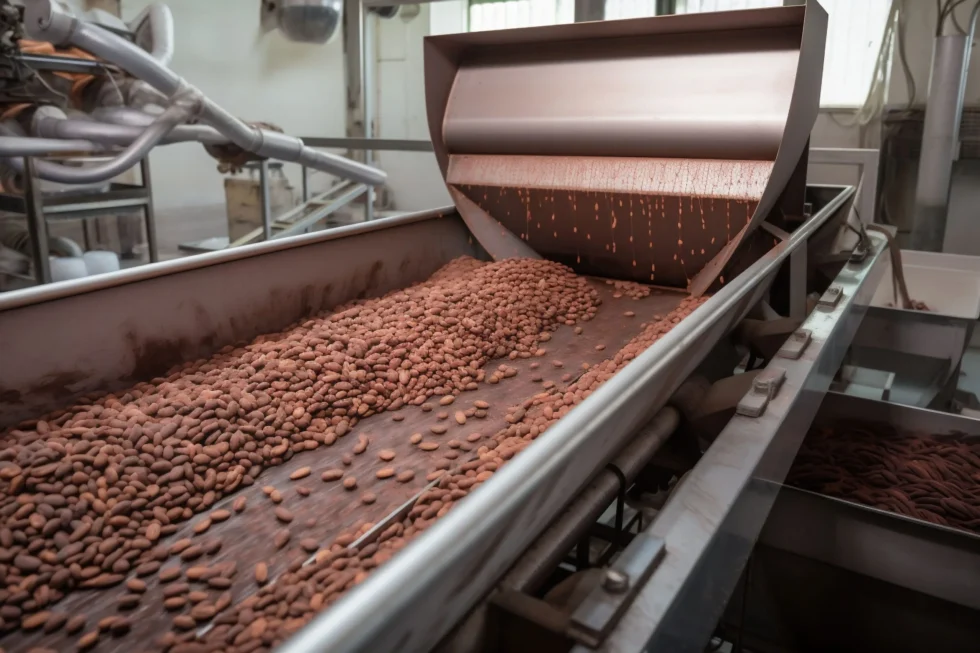
Production environment at Cargill Cacao

How Cargill Cacao Safeguards Product Safety

Cargill is one of the world's largest players in the cocoa industry and has factories and facilities across the
Lees meer >

Request advice on mould- and bacteria-resistant coatings for the food industry

Contact Us

We use your information to respond to your message and to contact you when necessary. Read more in our privacy statement.

Direct contact

Are you struggling? We're happy to help!

Clean end result of mould-resistant coating in the food industry