At first glance, nothing seems wrong: a fresh wall, well-ventilated rooms. Yet mould can begin to take hold at an early stage — and often invisibly. This early-stage mould growth is an underestimated problem with consequences for air quality and health. Ventilation alone is not always enough.
How early-stage mould develops (and remains unnoticed)
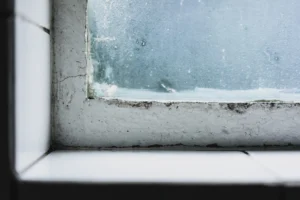
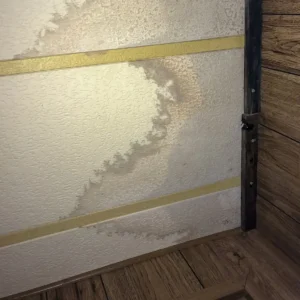
Cladosporium, Penicillium, Aspergillus and Stachybotrys are the most common types found in homes. Their microscopic spores are constantly present in the air and develop as soon as they reach a damp substrate — a cold external wall, a patch of condensation behind a cupboard or a moisture bridge between building materials. The insidious aspect is that development often begins inside the wall or behind surfaces (between plasterboard, wallpaper or paint), with the familiar black, green or grey patches appearing only later.
Why ventilation is not always sufficient
Ventilation is essential, but not a guarantee. Thermal bridges, local building defects or moisture accumulation behind furniture and curtains, as well as temporary peaks in moisture (cooking, showering, breathing in poorly ventilated bedrooms), create local microclimates. These persist even with mechanical ventilation or open windows, allowing mould to develop nonetheless.
Risks and a preventive finish
Mould releases microbial volatile organic compounds (MVOCs) and spreads spores that can lead to respiratory symptoms and allergies during prolonged exposure — particularly in children, older people and people with asthma. The longer mould remains unnoticed, the larger the colony and the more difficult it is to combat. In vulnerable areas, a wall paint suitable for moisture-laden conditions can be a sensible choice: Inducoat Fungi, with a dry paint film that is resistant to mould. Not a general solution and not a substitute for ventilation or tackling the source — the value lies in the performance of the finishing layer, within an integrated approach that addresses the cause.
Answer a few short questions to discover the likely cause and the appropriate approach.